Financial Statement Preparation
- Enrolled Agents licensed to practice before the IRS
- English and Spanish
- Since 2009 · 17+ years combined
- Free 30-minute consultation


Schedule a free consultation call Today!
A bank, an investor, a landlord or a licensing board has asked you for financial statements, and there is a deadline attached. That is what financial statement preparation is for. From our Coral Springs office we build them from your books — in English or Spanish — for businesses across Broward County and the rest of Florida.
Almost nobody goes looking for this service. You get sent for it.
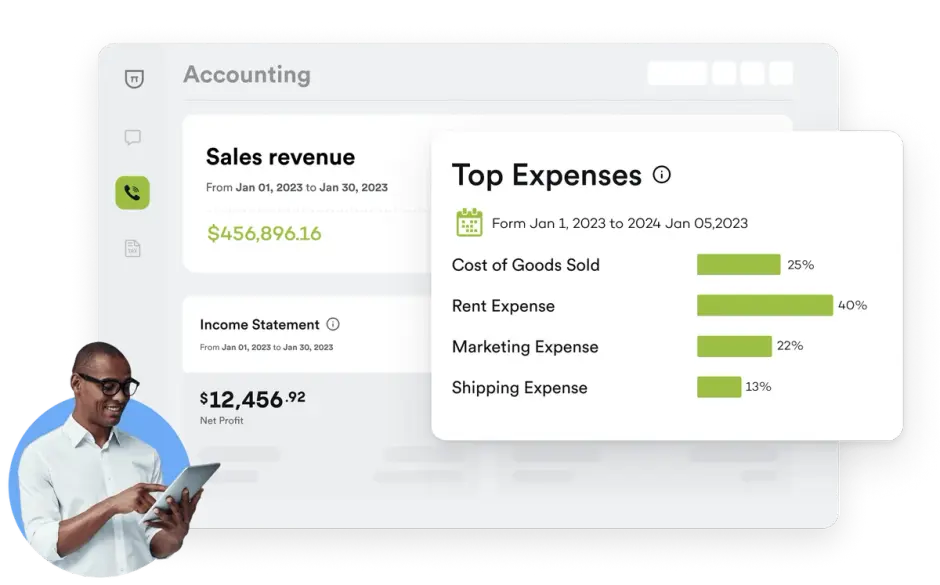
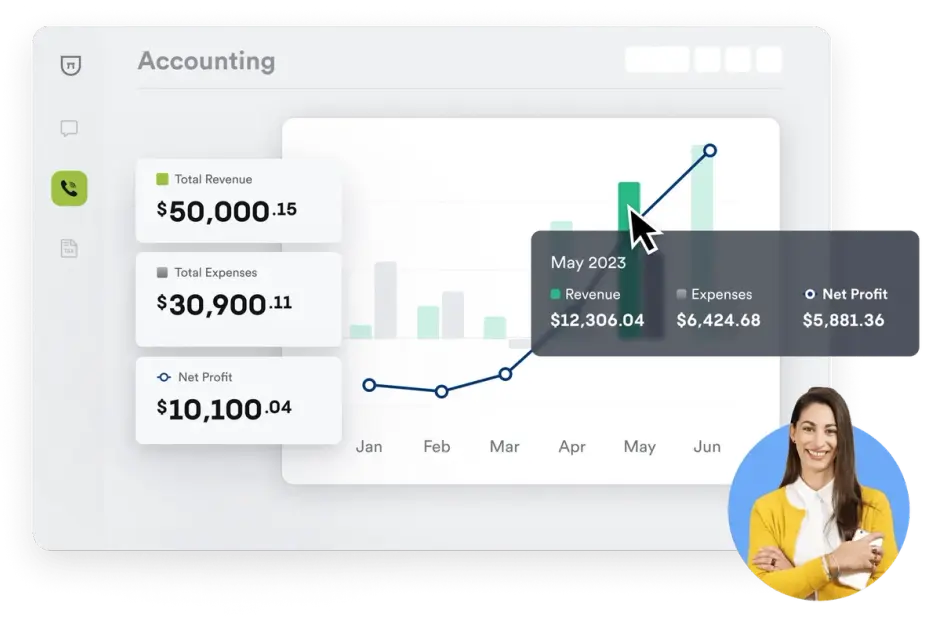
The three statements, and what each one answers
The three statements a lender usually asks for answer three different questions. They are not the whole of a formal financial reporting package — a full presentation also carries a statement of changes in equity and the accompanying notes — but these are the three named in the request letter. The IRS describes the first two plainly: "An income statement shows the income and expenses of the business for a given period of time" and "A balance sheet shows the assets, liabilities, and your equity in the business on a given date" (Publication 583, Rev. December 2024).
- Income statement (profit and loss). Did the business make money over the period? A lender reads this one first.
- Balance sheet. What you own, what you owe, what is left. This is where a lender finds the debt you did not mention.
- Statement of cash flows. Where the cash actually went. A profitable company with no cash and a company losing money can look alike on a bank statement; this is the document that tells them apart.
Why you are being asked for them
The request comes from outside, and the requester rarely explains it:
- A bank or SBA lender underwriting a loan or a line of credit.
- A commercial landlord deciding whether to sign a lease with your company.
- An investor, an incoming partner, or a buyer doing due diligence.
- A licensing board, or a surety company writing a bond.
- A franchisor or a general contractor requiring proof of financial capacity before awarding work.
The IRS makes the same connection: good records let you prepare statements, and "These statements can help you in dealing with your bank or creditors and help you manage your business" (Publication 583, Rev. December 2024).
Compilation, review, audit: not the same service
This is the distinction that surprises people after they have already agreed to a price. Financial statements are delivered at different levels of assurance, and Florida's accountancy law is built on the same idea: it defines public accounting to take in "the utilization of any form of opinion or financial statements that provide a level of assurance", and treats the preparation of financial statements as part of that practice (Florida Statutes 473.302(8)(a) and (8)(c)). Compilations and reviews run under the AICPA's Statements on Standards for Accounting and Review Services (SSARS); audits, under generally accepted auditing standards.
- Compilation. The statements are assembled from the information you provide and presented in the proper form. No opinion, no conclusion, and no assurance of any kind is expressed on them (AICPA SSARS, AR-C section 80).
- Review. Limited assurance, based mainly on inquiry and analytical procedures, reporting whether anything came to the accountant's attention that would require material changes (AICPA SSARS, AR-C section 90).
- Audit. The highest level — an opinion on whether the statements are presented fairly, in all material respects, in accordance with the applicable accounting framework. Being free of material misstatement is what the auditor seeks reasonable assurance about, not what the opinion itself asserts, and getting there takes testing and third-party confirmations.
Independence is not an audit-only requirement: a review calls for it too. Where an opinion is involved, Florida puts it in the statute — a CPA "shall not express an opinion on the financial statements of an enterprise unless she or he and her or his firm are independent with respect to such enterprise" (Florida Statutes 473.315(1)).
So ask your bank, in writing, which level it requires. Businesses pay for an audit that was never requested more often than you would think. Bring the letter to your consultation and we will tell you which level your situation calls for.
It starts with the ledger, not the statement
Statements are only as good as the books under them. If your records are behind or scattered, the first work is monthly bookkeeping: reconciled accounts, classified transactions, a clean trial balance. With current books, statements take days. Rebuilding two years of records takes weeks — which is why you call before the lender's deadline, not after.
The same numbers go on your tax return
This is not a second set of books. The IRS rule for the corporate balance sheet is one sentence: "The balance sheets should agree with the corporation's books and records" (Instructions for Form 1120, 2025). Smaller corporations do get a break, but a narrower one than it sounds. For a C corporation filing Form 1120, "Corporations with total receipts... and total assets at the end of the tax year less than $250,000 are not required to complete Schedules L, M-1, and M-2...", and then only if the "Yes" box on Schedule K, question 13, is checked (Instructions for Form 1120, 2025). An S corporation runs on a different rule: answering "Yes" to question 11 on Schedule B — two separate tests, receipts under $250,000 and assets under $250,000 — means only that "the corporation is not required to complete Schedules L and M-1" (Form 1120-S, 2025). Schedule M-2, the accumulated adjustments account, still has to be completed. Either way, the exemption belongs to the IRS, not to your bank. Handling your statements and your corporate tax preparation in the same office keeps one set of numbers that agrees with itself.
Get your statements ready before the deadline
Bring the lender's request letter, or the list of what was asked for, and your access to the books. We will tell you what is missing, what level of service applies, and how long it will take. We are at 1700 N University Dr STE 210, Coral Springs, and the first consultation is free.
global financial solutions



Their bookkeeping service keeps our finances in perfect order month after month.
Accounting Max handled our corporate taxes with precision and clarity. Highly efficient!
I love that they speak Spanish! It made everything easier for me and my family.
Starting my LLC in Florida was stress-free thanks to their expert incorporation help.
Never missed a sales tax deadline thanks to their reliable and timely service.
Their financial reports are accurate and easy to understand. Great tool for decisions.
I needed a notary on short notice and they delivered—professional and fast.
Thanks to them, I got my EIN in one day. Super fast and helpful!
Got my documents notarized quickly and professionally. Great experience!
The audit assistance was excellent—they were clear, calm, and took care of everything.
They made my personal taxes so simple. I even got a bigger refund than expected!
Having someone explain taxes in Spanish helped me feel confident and secure.
Filing personal taxes used to stress me out. Now it's a breeze thanks to them.
Their advice on corporate tax saved us thousands. Truly knowledgeable team.
They walked me through the incorporation process step-by-step. Clear and efficient.
Bookkeeping used to be a nightmare—now I can focus on growing my business.
Sales tax filing is finally under control. They make sure everything is on time.
They helped me apply for my ITIN and explained everything step by step. Very supportive!
Their team is responsive, professional, and truly cares. Best accounting firm I’ve worked with.
They represented me during an IRS audit and helped resolve the issue without penalties.
What to expect from accounting Max Services?

One-on-one expert support
Powerful financial reporting